Blog Post #3 How will your interactive learning resource specifically ensure that the needs of all learners can be met?
In our first group project about photography, my plan was to have the Royal Conservatory of Music, specifically their music theory style online music learning platform and user interface to teach and instruct beginner photographers. This insures everyone that have any kind of internet connected device can access their learning materials, whether it being a tablet, a smartphone, a smart TV, or any computer regardless of their OS. Much like RCM, my plan is to incorporate interactive videos alongside practice questions, as well as practical user interactive graphics. With a step above the RCM, I will incorporate auto dubbing with all the common languages available, this creates a fair advantage for learners that might not speak English. This brings us to the next point, everyone is created equal, but some are more equal than others. Universal Design Learning.
In the previous paragraph, having an interactive user interface to teach photography is only useful up to anyone that knows the basics of how to use a computer. What if it’s someone old fashioned that doesn’t know how to use a computer, I can theoretically write a physical copy of a learner’s manual, mail it to the learner.
In the previous blog, we studied the different methods of teaching and learning, and UDL is the concept of identifying the correct teaching method for the right person, this removes the barrier of learning a learner may have difficulties with. For example, say you’re teaching French, you make a video, you make flashcards, you also make interactive games as well as perhaps 1:1 coaching or in person classes. Some learners even at the same level might learn better with video, and some who have say vision issues will learn better with audio files. The concept of UDL is to eliminate friction to find a fit for the right learner, there are no one size fits all when it comes to the right teaching method.
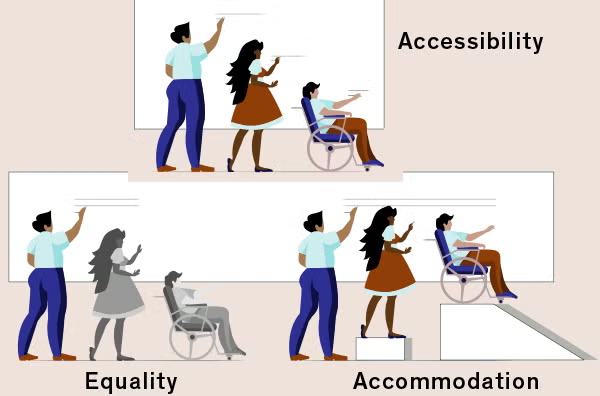
This brings me to the final point of a real life example of how when I taught, I ensured the needs of all learners can be met. When I taught biking skills at Pedalheads, there was obviously a variety of different learners ranging from ages 3-12 from those learning how to ride without training wheels to those learning how to ride on the roads safely. But even learners within the same skill level almost always require different needs, one might be starting to learn without training wheels at age 3 another might be already 10 but because the 10 year old has never ridden a bike before. Despite them both at the same level, their learning needs vary greatly, the instructional phrases for instance you say to a 3 vs a 10 year old is much different, and for the 3 year old, one expects a much shorter attention span and especially in hot weather, requires more breaks in the shade and water than the 10 year old. This is one perfect example of equal on paper, complete different methods of accommodations of how I incorporated UDL in real life without involving computers or digital tools.
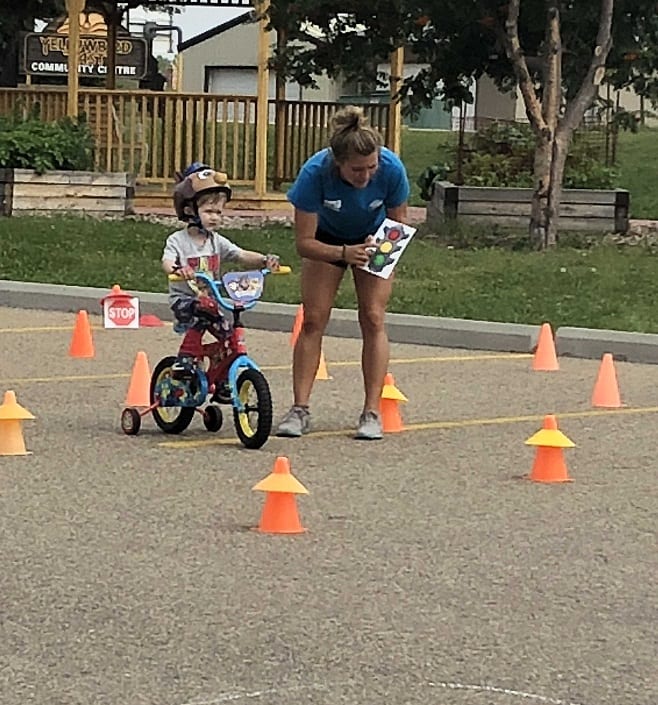
Pedalheads instructor teaching a young beginner how to ride a bike with training wheels that comes off soon

An adult beginner learning how to ride a bike.
References: Stapleton-Corcoran, Erin. “Universal Design for Learning (UDL) | Center for the Advancement of Teaching Excellence | University of Illinois Chicago.” University of Illinois Chicago, 12 Feb. 2022, teaching.uic.edu/cate-teaching-guides/inclusive-equity-minded-teaching-practices/universal-design-for-learning-udl/. Accessed 1 Mar. 2026.
“Balance Bikes vs Training Wheels: What’s Best for Young Riders?” Dunbar Cycles, SW, 11 Feb. 2026, dunbarcycles.com/blogs/default-blog/balance-bikes-vs-training-wheels-what-s-best-for-young-riders. Accessed 2 Mar. 2026.
Mercê, Cristiana, et al. “Learning to Cycle: From Training Wheels to Balance Bike.” International Journal of Environmental Research and Public Health, vol. 19, no. 3, 5 Feb. 2022, https://doi.org/10.3390/ijerph19031814.